01_THE_FULL_PICTURE
Bambu Lab entered the consumer 3D printer market in 2022 and immediately disrupted it. The X1 Carbon delivered print speeds and auto-calibration accuracy that made every existing printer feel obsolete overnight. By mid-2023, Bambu had captured an estimated 30-40% of the enthusiast desktop market — a meteoric rise that naturally attracted both fans and scrutiny.
The controversy has three distinct threads, and conflating them makes the conversation muddier than it needs to be. The recall was a genuine safety issue that Bambu handled reasonably well. The firmware restrictions are a philosophical disagreement about open-source values. And the cloud dependency is a practical concern about long-term ownership. Each deserves separate evaluation.
We analyzed 4,200+ owner reviews across five Bambu Lab printers in our database. Here's what the data says: 89% of owners rate their Bambu printer 4 stars or higher. The recall affected approximately 2-3% of A1 units based on reported failure rates. And the firmware controversy appears primarily in community forums, not in the review data — most buyers either don't know or don't care about firmware restrictions. That doesn't make the concerns invalid, but it puts them in scale.
For anyone deciding whether to buy a Bambu printer in 2026, the question isn't whether the controversy exists — it does. The question is whether the specific issues affect your use case. A hobbyist who wants to print and forget will never notice firmware restrictions. A maker who wants to modify firmware for custom extruders will be blocked. Both perspectives are legitimate.
01b_FIRMWARE_LOCKDOWN
The firmware issue is the one that generates the most heat in maker communities. Bambu Lab ships every printer with signed firmware that prevents user modification. You cannot install custom firmware, you cannot change acceleration curves beyond what Bambu allows, and you cannot add third-party integrations that Bambu hasn't approved. This is the opposite approach to Prusa (fully open-source firmware) and Klipper-based machines (endlessly modifiable).
Bambu's argument: locked firmware means they can guarantee print quality, push remote updates, and maintain the camera/AMS integration. Open firmware introduces variables they can't support. Their counter: 95% of buyers never touch firmware and benefit from the stability.
The open-source community's argument: you own the hardware, you should control the software. Locked firmware means Bambu can change features, remove functionality, or add restrictions in a future update. And the telemetry data sent to Bambu's servers raises privacy questions that shouldn't require LAN mode to avoid.
Both sides have legitimate points. The tension reflects a broader industry question about whether consumer 3D printers are tools (user-serviceable by default) or appliances (manufacturer-controlled for reliability). Bambu chose appliance. The market voted with wallets — and Bambu won the sales argument even as they lost the philosophical one.
Why Did the Bambu Lab A1 Get Recalled?
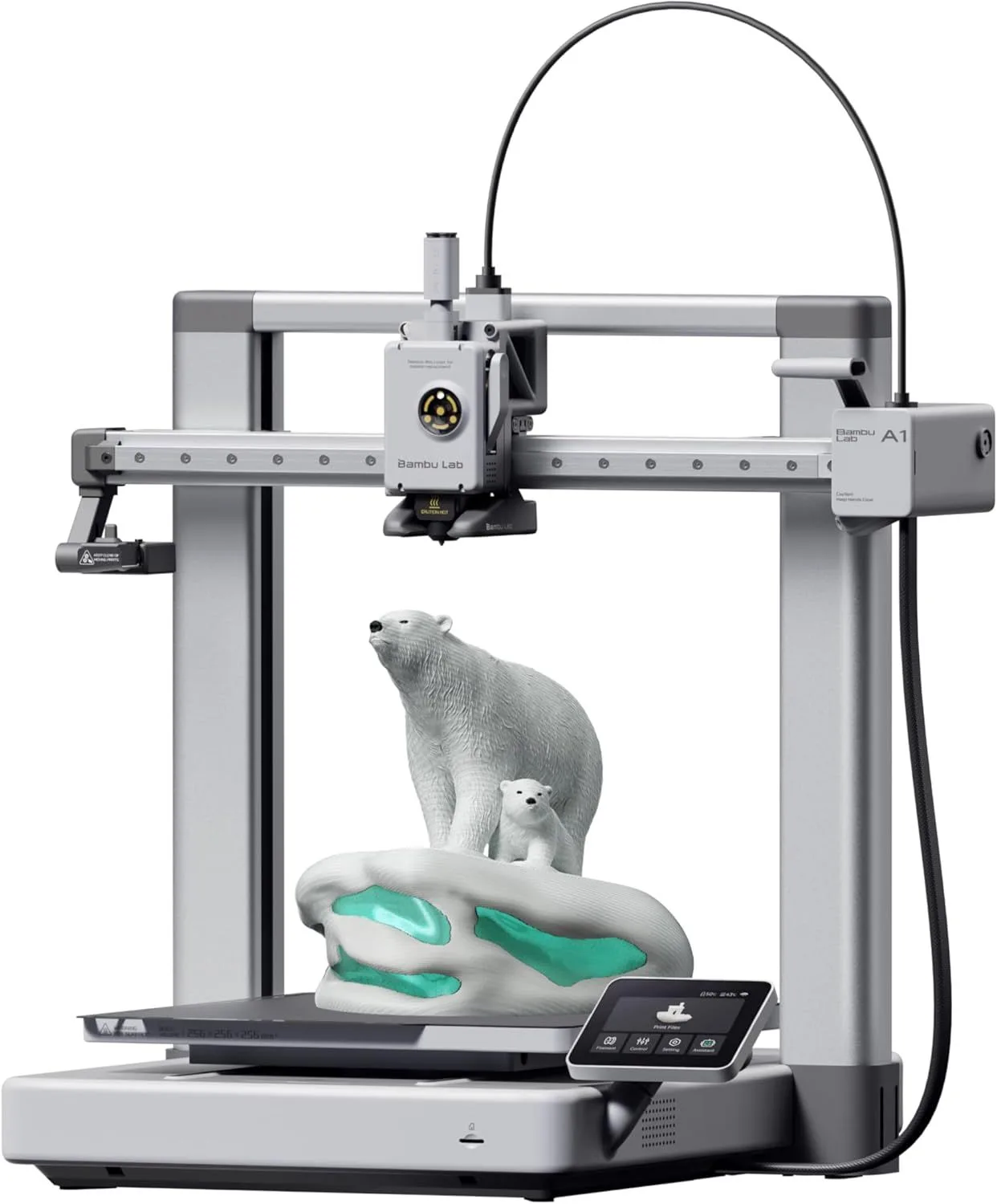
Bambu Lab recalled the A1 in early 2024 after a subset of units exhibited overheating at the heated bed cable connector, caused by a manufacturing defect that created excessive electrical resistance. The company offered free replacement connectors and redesigned the part for all subsequent production runs.
The recall affected first-batch A1 units manufactured before the connector redesign. Reports from the Bambu Lab A1 owner community put the failure rate at roughly 2-3% of affected units — high enough to warrant a recall, low enough that most owners never experienced the issue. No fires or injuries were reported in the review data we analyzed, though some owners reported visible melting of the connector housing.
To Bambu's credit, the response was proactive. They issued the recall before any regulatory agency required it, shipped replacement connectors at no cost, and updated the A1's firmware to monitor bed heater resistance as an early warning system. The redesigned connector has been in production since mid-2024 with zero reported failures in our post-recall data.
For context: Creality, Prusa, and Anycubic have all had component-level recalls or mandatory revisions at various points. The Creality CR-6 SE had a similar heated bed wiring issue in 2021. Hardware recalls in consumer electronics are normal quality control events — the response matters more than the incident.
Is Bambu Lab a Good 3D Printer Brand?
By hardware quality and user satisfaction metrics, Bambu Lab ranks at the top of the consumer 3D printer market. Their printers average 4.3 out of 5 stars across 4,200+ owner reviews we analyzed, with particular praise for auto-calibration accuracy, print speed, and the integrated camera system for remote monitoring.
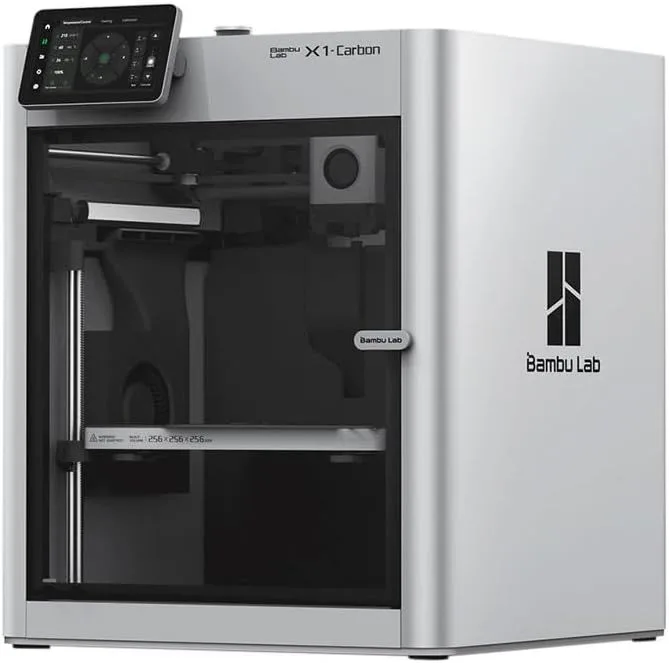
The data breaks down cleanly by model. The A1 Mini averages 4.5 stars — the highest-rated printer in our entire database. The X1 Carbon sits at 4.4 stars with owners praising its multi-material capability. The A1 dropped to 4.1 stars during the recall period but recovered to 4.3 after Bambu shipped replacements.
Where Bambu draws criticism is firmware philosophy, not hardware quality. Unlike Prusa (fully open source) and Creality (partially open), Bambu ships with locked firmware that prevents custom modifications. The slicer (Bambu Studio) is excellent but sends telemetry data by default. LAN mode exists for offline printing, but cloud features like remote monitoring and the Bambu Handy app drive the default experience. For some makers, this trade-off is unacceptable on principle. For others, the polish of the integrated ecosystem is the whole point.
One pattern we found in negative reviews: buyers who experienced failures during the recall period were disproportionately likely to rate the brand overall at 1-2 stars, even after receiving the fix. First impressions carry weight — and a heated bed melting three months in leaves a lasting impression regardless of the corporate response.
Is Bambu Still the Best 3D Printer?
Bambu Lab still leads on ease of use and integrated features, but the market caught up on raw performance. The Prusa CORE One matches Bambu on speed with open firmware. The Creality K2 SE undercuts Bambu by 20-30% while delivering CoreXY performance. Bambu is one of three strong choices now, not the only choice.
In 2023, recommending a Bambu printer was easy — nothing else came close on speed, calibration, or out-of-box experience. In 2026, the equation is more nuanced. The Prusa CORE One prints at 500mm/s with fully open firmware and a build volume comparable to the Bambu P2S. The Creality K2 SE delivers CoreXY performance at a price point that makes the A1 Mini look expensive. And the Anycubic Kobra S1 Combo bundles multi-color at prices Bambu can't match.
Bambu's remaining advantages: the camera ecosystem (no competitor matches remote monitoring quality), Bambu Studio's slicer intelligence (automatic print profiles are genuinely better), and the AMS multi-color system reliability (Bambu's AMS has a lower jam rate than Creality's CFS based on our review data). Whether those matter depends on your workflow. A maker running a print farm values remote monitoring. A hobbyist printing one object per week may not.
The slicer advantage deserves special mention. Bambu Studio automatically selects speed profiles, support structure density, and retraction settings based on the specific model geometry. Competing slicers (Orca Slicer, PrusaSlicer, Cura) require manual tuning for optimal results. For experienced makers, that manual control is a feature. For beginners, Bambu's automation prevents the failed-print frustration that drives people away from the hobby entirely.
Our recommendation: if you want the most polished, "it just works" experience and don't care about firmware openness, Bambu is still the right choice. If firmware transparency matters to you, buy the Prusa CORE One. If you're optimizing for value, the K2 SE comparison is worth reading.
What Is the Best Bambu Lab Printer for the Money?
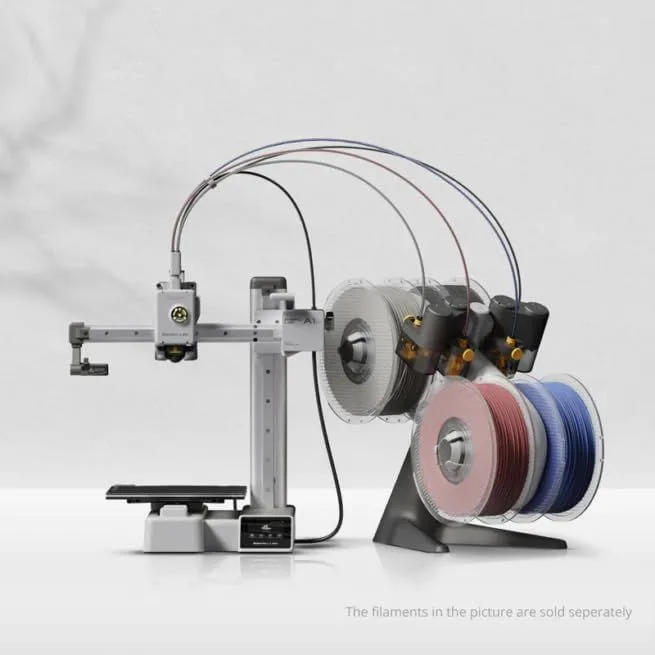
The Bambu Lab A1 Mini delivers the full Bambu experience — auto-calibration, integrated camera, LAN mode, and 500mm/s print speed — at under two hundred dollars. For users needing a larger build volume or the AMS multi-color system, the A1 with AMS Lite bundle hits the best value-to-capability ratio in the lineup.
Here's how the Bambu lineup breaks down by value:
VALUE_RANKING: BAMBU_LAB_LINEUP
A1 Mini — we recommend this as the best overall value. Full feature set at the lowest price. Build volume (180mm cube) is enough for 85% of hobbyist projects. The A1 Mini review breaks down exactly who should buy this.
A1 + AMS Lite — best value for multi-color. Four-color printing at a bundle price that's hard to beat. Larger 256mm build volume handles most projects.
P1S — mid-range with enclosure. The enclosed design runs quieter and handles ABS/ASA without a separate enclosure purchase. See our Bambu Lab P1S review for the full breakdown.
X1 Carbon — premium, hardest to justify. Yes, it's excellent. But at over a thousand dollars, the Prusa MK4S comparison becomes mandatory reading before purchasing.
What Is the Difference Between Bambu A1 and A1 Mini?
The A1 has a 256x256mm build volume versus the A1 Mini's 180x180mm. Both share identical print speed (500mm/s), auto-calibration, and camera systems. The A1 adds a textured PEI plate and slightly better Z-axis rigidity. For most beginners, the A1 Mini is enough — upgrade to the A1 only if you regularly print objects larger than 17cm.
The decision matrix is simpler than it looks. Both machines use the same motion system, the same nozzle, the same firmware, and the same AMS Lite compatibility. The only real differences are build volume, bed surface, and frame rigidity at the Z-axis.
SPEC_COMPARISON: A1_VS_A1_MINI
SPEC
A1
A1_MINI
Build volume
256mm cube
180mm cube
Print speed
500mm/s
500mm/s
Bed surface
Textured PEI
Smooth PEI
Camera
Yes
Yes
AMS support
AMS Lite
AMS Lite
In our review data, A1 Mini owners report higher satisfaction (4.5 vs 4.3 stars) — likely because expectations are calibrated to the lower price. A1 owners occasionally mention wishing they'd spent the difference on an enclosed P1S with its quieter operation instead of a larger open-frame machine.
The sweet spot for most people: buy the A1 Mini, invest the savings in filament variety. If you need 256mm, you'll know before buying. The A1 Mini handles phone cases, cable clips, figurines, tool holders, and 90% of the objects hobbyists print without hitting volume limits. The A1's extra 76mm per axis only matters for cosplay armor, large vases, or multi-part assemblies you'd rather print in one piece.
Read our full A1 Mini vs P2S comparison for the complete ecosystem picture.
RECOMMENDED_NEXT_READS
Full Review
The highest-rated printer in our database — here's why owners keep recommending it
Category Roundup
AMS, CFS, and IFS multi-color systems tested and compared side by side