layers LAYERDEPTH
System.Status: ACTIVE_CALIBRATION

PLA_VS_PETG
ABS_VS_TPU

> INITIALIZING MATERIAL_SCIENCE_ANALYSIS...
> DATA_SOURCE: FDM_POLYMER_DATABASE
> SCANNING 152000+ REVIEWS
> OBJECTIVE: MECHANICAL_REQUIREMENT_MATCHING

3D printer filament is thermoplastic material fed into FDM printers and melted through a heated nozzle to build objects layer by layer. PLA is the most forgiving for beginners, PETG adds water resistance, ABS handles higher temperatures but needs an enclosure, and TPU produces flexible parts. Your filament choice determines print strength, surface finish, and viable applications.

LayerDepth is reader-supported. We may earn a commission on purchases through our links. Disclosure

01_MATERIAL_SCIENCE

3D printer filament is the thermoplastic material fed through an FDM printer's heated nozzle to build objects layer by layer. The four main types — PLA, PETG, ABS, and TPU — each have different strength, heat resistance, flexibility, and printability characteristics that determine which projects they can handle and which printers they work with.

Yet most "filament guides" read like rewritten Wikipedia entries — they list temperatures and leave you no closer to a decision. Filament choice determines whether your print survives a drop, warps off the bed at 2am, or dissolves in your morning coffee.

We analyzed purchase data across 152,000+ reviews in our product database, cross-referenced mechanical testing results from university research, and tracked community reports from r/3Dprinting (2.8 million members) and the Bambu Lab, Prusa, and Creality forums. The result is a practical guide that tells you which filament to buy, which to avoid, and why the "just use PLA" advice stops being useful the moment you need a part that survives outdoors or holds a thread.

Here's the thing: filament marketing is wildly misleading. Every brand claims "high speed" and "excellent adhesion." The actual differences show up in the thermal data, the community failure reports, and the long-term durability testing that nobody runs for sponsored reviews.

The framework is straightforward. PLA for prototypes and display pieces. PETG for functional parts that need to survive handling. ABS/ASA when heat resistance is non-negotiable. TPU when flexibility is the entire point. Everything beyond that is refinement within those categories.
02_PLA: THE BASELINE

DIFFICULTY: BEGINNER
PLA THERMAL_PROFILE
NOZZLE 190° 220° BED 50° 60° 0°C 50°C 100°C 150°C 200°C 250°C 300°C
LOW_WARP
BIO_BASED
HIGH_DETAIL
MINIMAL_ODOR

Polylactic acid is the filament that ships with nearly every printer for good reason: it prints at lower temperatures, rarely warps, produces minimal odor, and delivers sharp surface detail. If you are running your first 3D printer, PLA is where you start — no exceptions.

The material comes from fermented plant starch (usually corn), which gives it biodegradable credentials that no petroleum-based plastic can match. In practice, this matters less than you think — PLA does not compost in your backyard. Industrial composting facilities running at 58°C+ can break it down, but a PLA part sitting on your shelf will last decades.

Where PLA fails is heat resistance. Glass transition temperature sits around 55-60°C. Leave a PLA phone mount on your car dashboard in summer and it will sag within hours. Functional parts that see sustained temperatures above 50°C need PETG or ABS instead.

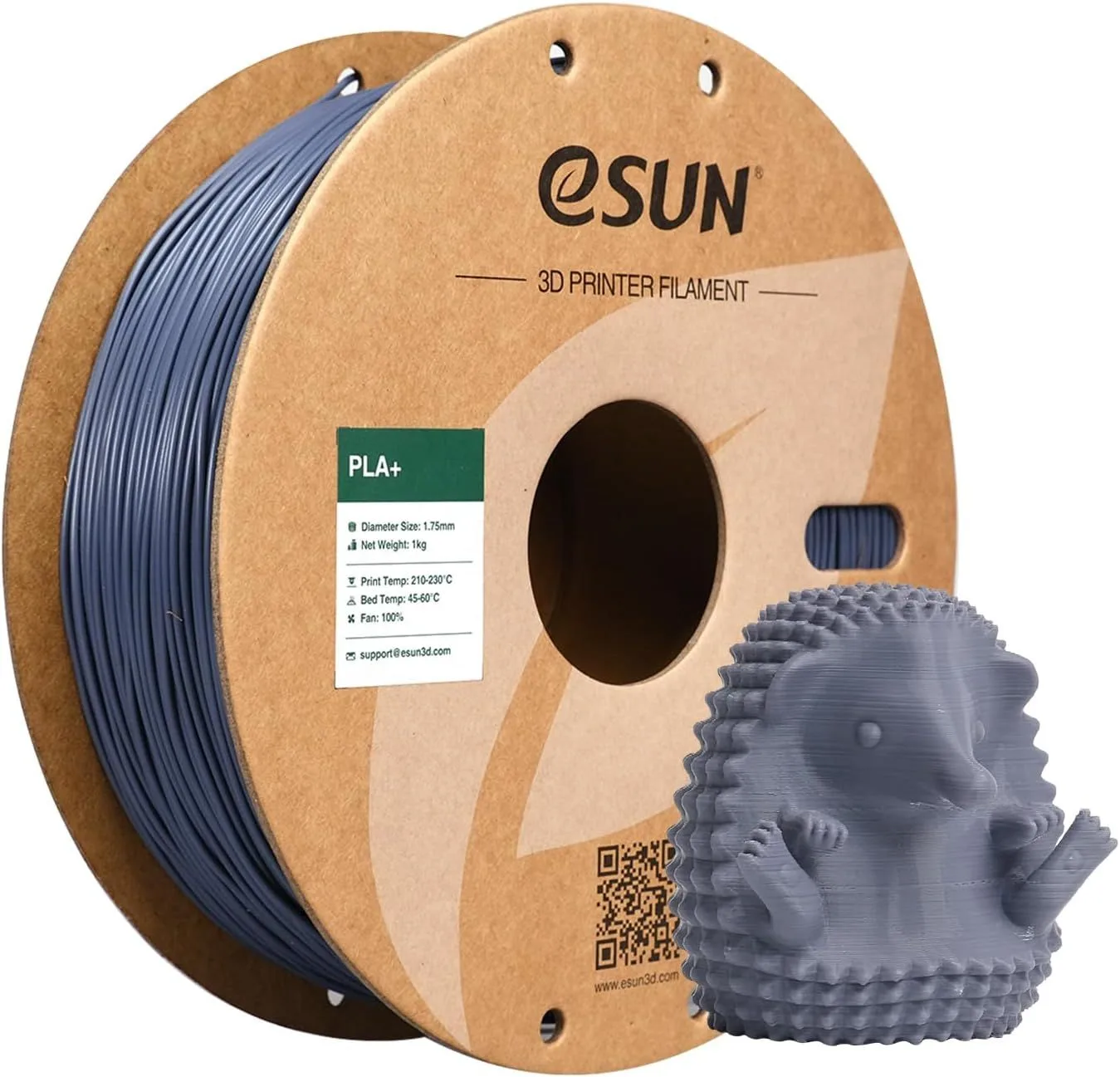
PLA+ and PLA Pro variants add impact modifiers that increase toughness by roughly 30-40% over standard PLA. The trade-off is slightly higher nozzle temperatures (210-230°C) and marginally more stringing. For functional PLA parts, PLA+ is worth the extra cost — we compared the specific differences in our PLA vs PLA+ breakdown.

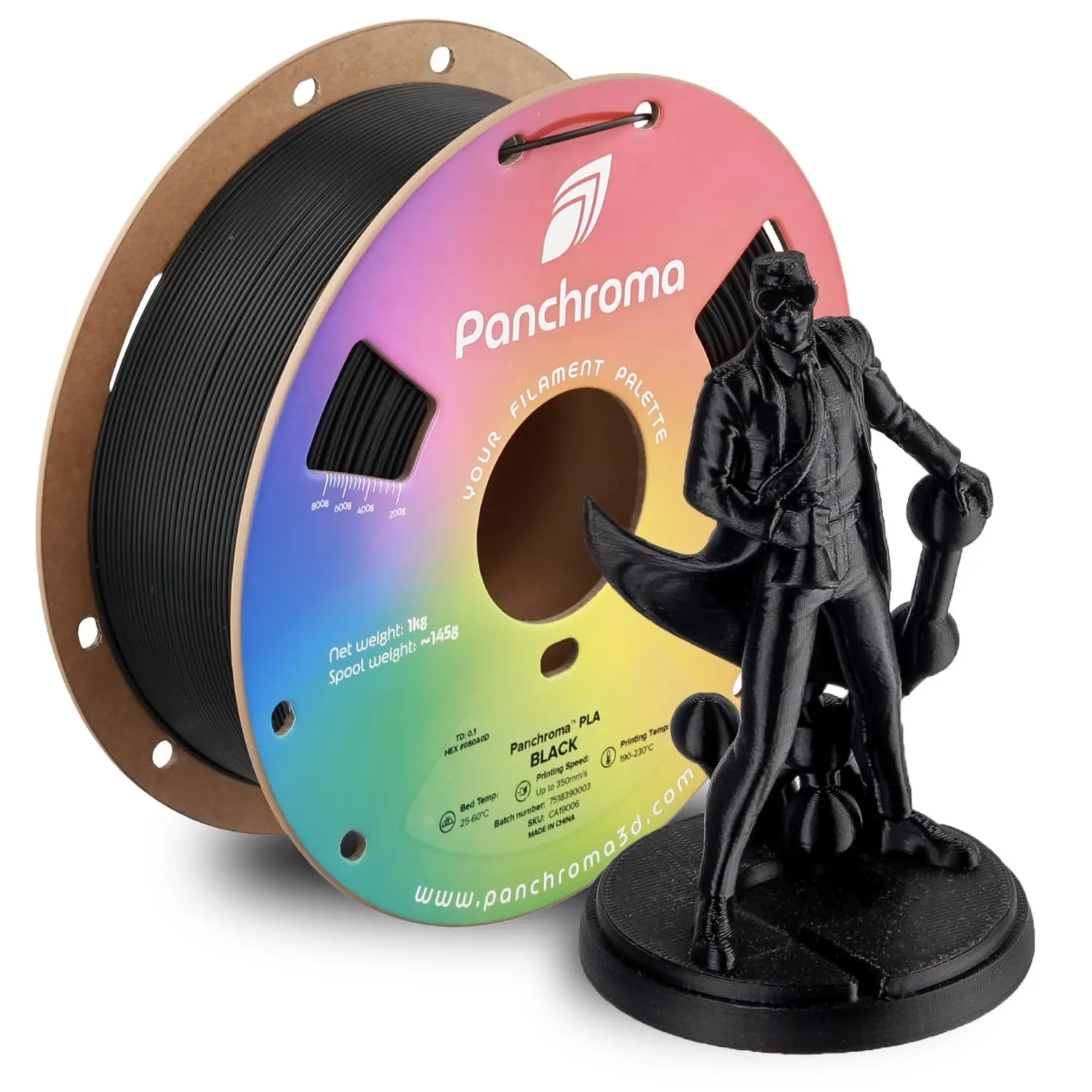
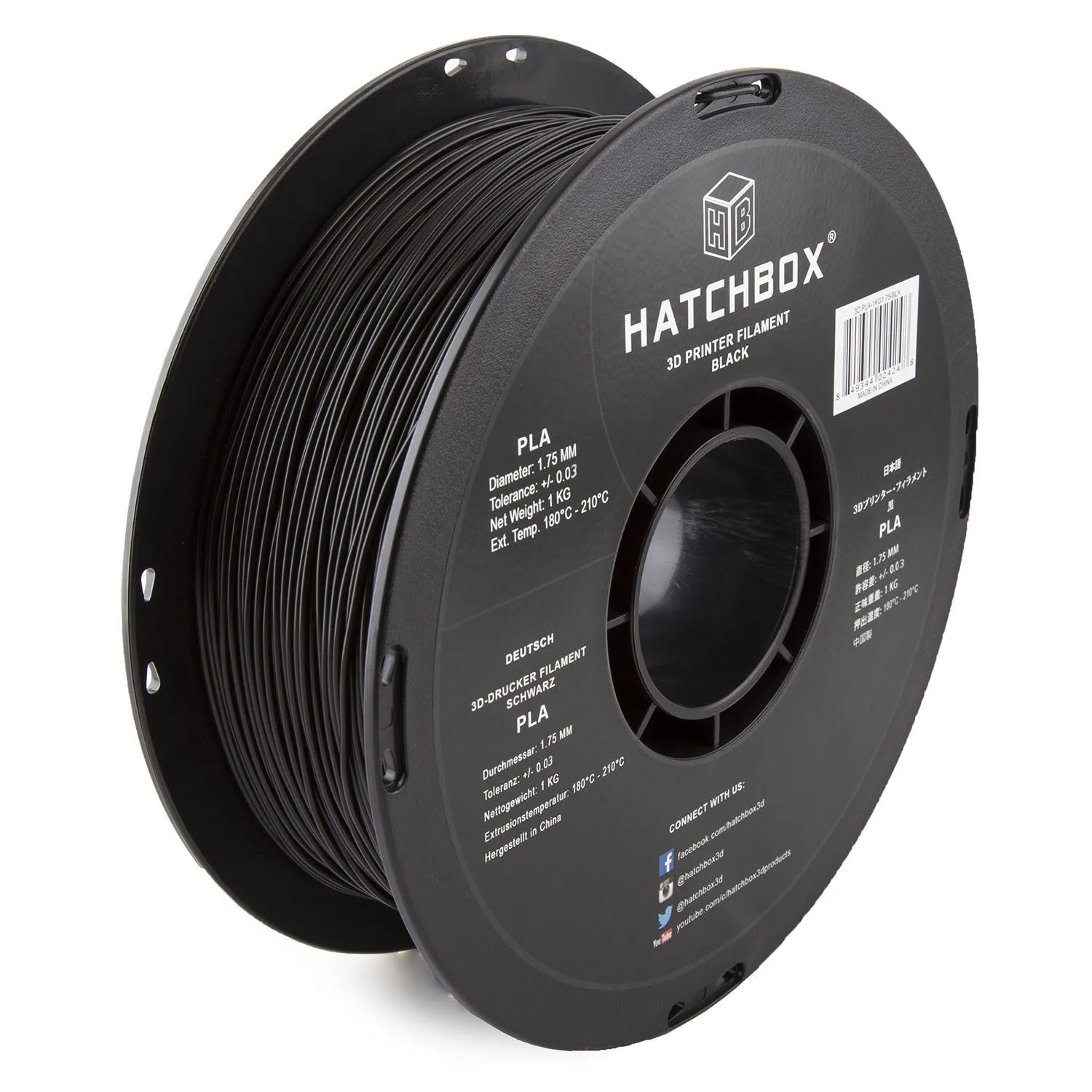
Our top PLA picks: Hatchbox PLA filament for consistent quality across 20+ colors, and eSUN PLA+ filament for functional parts that need extra impact resistance.

03_PETG: THE WORKHORSE

Polyethylene terephthalate glycol-modified sits in the sweet spot between PLA's ease and ABS's durability. It resists impacts better than PLA, handles temperatures up to 80°C, and remains nearly as printable. If you could only own two filaments, PLA and PETG would cover 90% of use cases.

The glycol modification separates PETG from regular PET (the stuff water bottles are made from). That chemical tweak eliminates crystallization during cooling, which means less warping and better layer adhesion. You get a clear, glossy material that bends before breaking — the opposite of PLA, which snaps clean.

PETG's biggest enemy is moisture. The material is hygroscopic — it absorbs water from ambient air. Wet PETG produces popping sounds during extrusion, visible bubbles on the print surface, and strings that make your print look like it grew hair. Dry your spools. A 4-6 hour session at 65°C in a filament dryer fixes most moisture problems. The Anycubic Kobra S1 Combo is the only printer with a built-in filament dryer — a genuine advantage for hygroscopic materials.

Bed adhesion with PETG is a double-edged sword. The material bonds aggressively to smooth PEI sheets — so aggressively that it can rip surface coating off if you don't let the bed cool completely before removing prints. Use the textured PEI side (most modern printers include dual-sided plates) or apply a thin layer of glue stick as a release agent.

PETG is the outdoor filament.

UV resistance makes it the default choice for any part exposed to sunlight. Unlike ABS, which yellows and becomes brittle after months of UV exposure, PETG maintains structural integrity outdoors for years. Garden tool holders, mailbox fixtures, outdoor enclosure parts — PETG handles them all without degradation.

DIFFICULTY: INTERMEDIATE
PETG THERMAL_PROFILE
NOZZLE 230° 250° BED 70° 80° 0°C 50°C 100°C 150°C 200°C 250°C 300°C
UV_RESISTANT
IMPACT_TOUGH
FOOD_SAFE*
CHEMICAL_RESIST

*The raw material is food-safe. FDM layer lines harbor bacteria. Not recommended for food contact without coating.

04_ABS: THE HEAT SURVIVOR

[!] ENCLOSURE_REQUIRED
ABS THERMAL_PROFILE
NOZZLE 240° 260° BED 100° 110° CHAMBER 40° 60° 0°C 50°C 100°C 150°C 200°C 250°C 300°C
HEAT_100°C
ACETONE_SMOOTH
TOUGH
TOXIC_FUMES

Acrylonitrile butadiene styrene was the original 3D printing filament and it remains the go-to for heat resistance. With a glass transition temperature around 100°C, ABS parts survive environments that destroy PLA and push PETG to its limits. Engine bay brackets, electronics enclosures near heat sources, anything that sits near a running motor — ABS territory.

The catch is that ABS demands an enclosed printer. Without enclosure, the material warps catastrophically. Ambient temperature changes during printing cause differential cooling across layers, and ABS's high shrinkage rate turns this into curled corners, cracked layers, and prints that pop off the bed mid-job. The Bambu Lab P2S with carbon filter, Prusa Core One enclosed chamber, and Bambu Lab X1 Carbon all have enclosed chambers with active filtration designed for ABS.

Fumes are the other factor. ABS emits styrene during printing — a known irritant that can cause headaches and respiratory issues with prolonged exposure. An activated carbon filter handles most of it, but printing ABS in a bedroom is a bad idea regardless. If you need heat-resistant parts and want to avoid fumes entirely, ASA is the modern alternative. Same thermal properties, significantly lower emissions, better UV stability.

ABS has one trick no other common filament can match.

Acetone vapor smoothing. Exposing an ABS print to acetone vapor dissolves the surface layer slightly, filling in layer lines and producing a glossy, injection-molded finish. No other common filament offers this kind of post-processing. For display pieces that need professional aesthetics, the ABS-to-acetone-smooth pipeline produces results that make people ask if the part was 3D printed at all.

05_TPU: THE FLEX

Thermoplastic polyurethane bends, stretches, and bounces back. Shore hardness ratings range from 85A (firm rubber) to 95A (hard rubber), and the material absorbs impacts instead of shattering. Phone cases, drone bumper guards, shoe insoles, vibration dampeners, gripper pads — TPU occupies the category where rigid plastics fail.

Printing TPU requires a direct drive extruder. The filament is flexible enough to buckle inside a Bowden tube, jamming the pathway between the extruder gear and the hotend. Bowden setups can technically push TPU at speeds under 20mm/s, but expect frequent jams and inconsistent extrusion. Every printer we recommend for TPU — the Bambu Lab A1 Mini, Bambu Lab P2S, Prusa MK4S with Nextruder — uses direct drive.

Speed is the main compromise. TPU prints at 30-50mm/s on most machines, roughly 10x slower than PLA on a modern CoreXY. The Bambu Lab P2S's DynaSense servo extruder handles TPU better than the P1S ever did — the servo motor eliminates the grinding and clicking that plagued gear-driven extruders on flexible materials.

Layer adhesion on TPU is excellent, which makes parts nearly isotropic (equal strength in all directions). A PLA bracket has a weak Z-axis where layers delaminate under stress. A TPU part just flexes. This is why TPU dominates in applications where stress comes from unpredictable directions — like a drone landing strut that absorbs force at whatever angle the drone hits the ground.

DIFFICULTY: INTERMEDIATE
TPU THERMAL_PROFILE
NOZZLE 220° 240° BED 40° 60° 0°C 50°C 100°C 150°C 200°C 250°C 300°C
FLEXIBLE_85A
IMPACT_ABSORB
DIRECT_DRIVE
SLOW_PRINT

06_SPECIALTY_MATERIALS

ASA

ABS_REPLACEMENT

Same heat resistance as ABS with better UV stability and lower fume output. The preferred material for outdoor functional parts. Requires an enclosed printer. If you are buying ABS for anything other than acetone smoothing, ASA is the better choice in 2026.

Nylon (PA)

ENGINEERING_GRADE

Exceptional mechanical properties — high tensile strength, good fatigue resistance, self-lubricating surface. Absorbs moisture aggressively (dry before every print). Requires enclosed printer with 260-280°C nozzle. The X1 Carbon's hardened steel nozzle handles carbon fiber nylon composites.

Carbon Fiber

COMPOSITE_MATERIAL

Short carbon fibers mixed into PLA, PETG, or Nylon base. Increases stiffness and reduces warping but requires a hardened steel nozzle — the fibers will destroy a brass nozzle within hours. PLA-CF is the easiest entry point. The Creality K1C with its Unicorn nozzle ships ready rated for carbon fiber composites.

07_PRINTER_COMPATIBILITY

Not every printer handles every material. Open-frame machines cap out at PLA and PETG. Enclosed printers unlock ABS, ASA, and engineering materials. Here's which printers support which filaments based on our testing.

MATERIAL_LOG PLA 190-220°C BEGINNER PETG 230-250°C INTERMEDIATE ABS 240-260°C ADVANCED TPU 220-240°C INTERMEDIATE ASA 240-260°C ADVANCED Nylon 250-270°C ADVANCED
Bambu Lab A1 Mini
Bambu Lab P2S
Creality K2 SE
ELEGOO Centauri Carbon
Prusa MK4S
Bambu Lab X1 Carbon

08_HEAD_TO_HEAD

PARAMETER PLA PETG ABS TPU
TENSILE_STRENGTH 50 MPa 47 MPa 40 MPa 26 MPa
IMPACT_RESISTANCE Low High Medium Very High
HEAT_RESISTANCE ~55°C ~80°C ~100°C ~60°C
PRINTABILITY 10/10 8/10 4/10 6/10
ENCLOSURE_NEEDED No No Yes No
UV_STABILITY Poor Excellent Poor Good
COST_PER_KG Low Medium Medium High

09_STORAGE_PROTOCOL

Moisture is the silent killer of print quality. Every filament absorbs water from air at different rates. Nylon and TPU are worst — they can absorb enough moisture in 24 hours of open-air exposure to produce visible quality degradation. Even PLA, often considered moisture-resistant, produces tiny bubbles and rough surfaces after a month of unprotected storage in humid environments.

The baseline solution: vacuum-sealed bags with silica gel desiccant packs. Toss in a humidity indicator card (blue means dry, pink means replace the desiccant). This costs under five dollars per spool and extends shelf life to 6-12 months for most materials. For details on specific solutions and long-term strategies, see our filament storage guide.

For active printing with hygroscopic materials (PETG, Nylon, TPU), a filament dry box with integrated feed port is the proper solution. The spool stays sealed and heated while filament feeds out to the printer. Budget dry boxes run around forty dollars. The Anycubic Kobra S1 Combo builds this directly into the multi-color system — a genuine advantage for anyone printing PETG or Nylon regularly.

10_RECOMMENDED_FILAMENTS

Hatchbox PLA filament
ID: HATCHBOX_PLA

Hatchbox PLA

BEST_PLA_OVERALL

Consistent diameter tolerance, minimal stringing, and 20+ color options. The most-recommended PLA across community forums for a reason. Rating: 4.5/5 from 58000+ reviews.

Read Full Review
eSUN PLA+ filament
ID: ESUN_PLA_PLUS

eSUN PLA+

BEST_PLA+_FOR_STRENGTH

30-40% tougher than standard PLA with nearly identical printability. The best budget PLA+ for functional parts. Rating: 4.4/5 from 32000+ reviews.

Read Full Review
Bambu Lab PLA Basic filament
ID: BAMBU_PLA_BASIC

Bambu Lab PLA Basic

BEST_FOR_BAMBU_PRINTERS

Tuned for Bambu Lab's RFID spool system. Auto-configures temperature and flow rate in Bambu Studio. Rating: 4.4/5 from 12000+ reviews.

Read Full Review
Polymaker PolyTerra PLA filament
ID: POLYTERRA_PLA

Polymaker PolyTerra PLA

BEST_ECO_OPTION

Cardboard spool eliminates plastic waste. The biggest difference from standard PLA is the matte finish that hides layer lines better than any glossy filament. Slightly higher price justified by the surface quality. Rating: 4.6/5 from 9500+ reviews.

Read Full Review

11_QUERY_LOG

QUERY_01: DOES PLA REQUIRE A HEATED BED...

No. PLA prints fine without a heated bed if you use blue tape or a glue stick. A heated bed at 50-60°C improves first-layer adhesion and reduces warping on larger prints, but it is not required. Most modern printers include one anyway.

QUERY_02: IS ABS SAFE TO PRINT AT HOME...

ABS releases styrene fumes during printing. You need either an enclosed printer with a carbon filter (like the Bambu Lab P2S or Prusa Core One) or strong external ventilation. Do not print ABS in a bedroom, nursery, or any unventilated room. PETG is a safer alternative for functional parts.

QUERY_03: WHY DOES PETG STRING SO MUCH...

PETG absorbs moisture from air. Wet filament strings badly regardless of settings. Dry your spool at 65°C for 4-6 hours first. Then increase retraction to 5-7mm for Bowden setups or 1-2mm for direct drive, and drop nozzle temperature by 5°C from your starting point.

QUERY_04: CAN A BOWDEN TUBE PRINTER HANDLE TPU...

Technically yes at speeds under 20mm/s, but expect jams. The flexible filament buckles inside the Bowden tube between the extruder and hotend. A direct drive extruder is strongly recommended for any flexible material. The Bambu Lab A1 Mini and P2S both handle TPU well with their direct drive systems.

QUERY_05: WHICH FILAMENT IS STRONGEST FOR FUNCTION...

For impact resistance, PETG and PLA+ outperform standard PLA by 30-40%. For heat resistance, ABS and ASA survive temperatures that warp PLA. For engineering applications, Nylon and polycarbonate are the strongest options but require enclosed printers with chamber heating. PETG is the best all-around compromise between printability and strength.

QUERY_06: HOW LONG DOES 3D PRINTER FILAMENT LAST I...

PLA and PETG last 6-12 months in a sealed bag with desiccant. ABS and Nylon absorb moisture faster — store them in a vacuum-sealed container or dry box with active desiccant. Open filament left out in humid environments can degrade within 2-4 weeks, causing stringing, popping sounds during printing, and weak layer adhesion.

Now That You Know the Materials

Material selected. We recommend starting with PLA for beginners and PLA+ for functional parts. Next step: find the right printer and filament brand.

RELATED_CONTENT

David King
VERIFIED
WRITTEN_BY
David KingFounder

I built LayerDepth to create the detailed, unbiased 3D printer comparison resource I wished existed. With a background in aerospace manufacturing management at Rolls-Royce — overseeing the build and assembly of complete jet engine sections for Airbus and Boeing aircraft — I apply that same demand for rigorous analysis and high standards to evaluating print quality, mechanical reliability, and real-world performance.

Full methodology arrow_forward