layers LAYERDEPTH
System.Status: PRODUCTION_MODE

PRINT_FARM_INIT

Starting a 3D printing business in 2026 requires two enclosed printers, a reliable filament supply chain, and a product niche that commands premium pricing over generic print-on-demand services. We break down the hardware, materials, sales channels, and production workflows that scale from Etsy side hustle to full-time print farm based on real throughput data from the printers we review.

> PRODUCTION_CAPACITY: 18h/day
> FILAMENT_BUDGET: $400-800/month
> TARGET: $2-4K_MONTHLY_REVENUE

LayerDepth is reader-supported. We may earn a commission on purchases through our links. Disclosure

01_THE_BUSINESS_REALITY

The 3D printing business model is simple: buy plastic at $18-25 per kilogram, turn it into objects that sell for 4-8x the material cost. The hard part is everything between those two numbers — print time, failure rate, machine reliability, post-processing labor, shipping, and customer service. Most "start a 3D printing business" guides skip straight to the Etsy listing. We start with the bottleneck: throughput.

Throughput is everything.

One printer running 18 hours per day produces roughly 2-4 mid-size objects. That is your daily capacity ceiling per machine. A typical Etsy print business hitting $3,000 per month needs 3-4 printers running consistently with a failure rate below 5%. The math is unforgiving — every failed print costs you material, time, and a delivery deadline. This is why printer reliability matters more for business use than for hobby use, and why we weight it heavily in our reviews.

Honestly, the people who succeed in this space are not the ones with the most printers. They are the ones who found a niche product with high perceived value and low competition. Custom D&D terrain sets, specific organizer systems for popular products, replacement parts for discontinued items, personalized gifts. Generic phone stands and Thingiverse downloads are a race to the bottom. Niche products command $30-80 per order where generic prints sell for $5-15.
02_PRODUCTION_HARDWARE

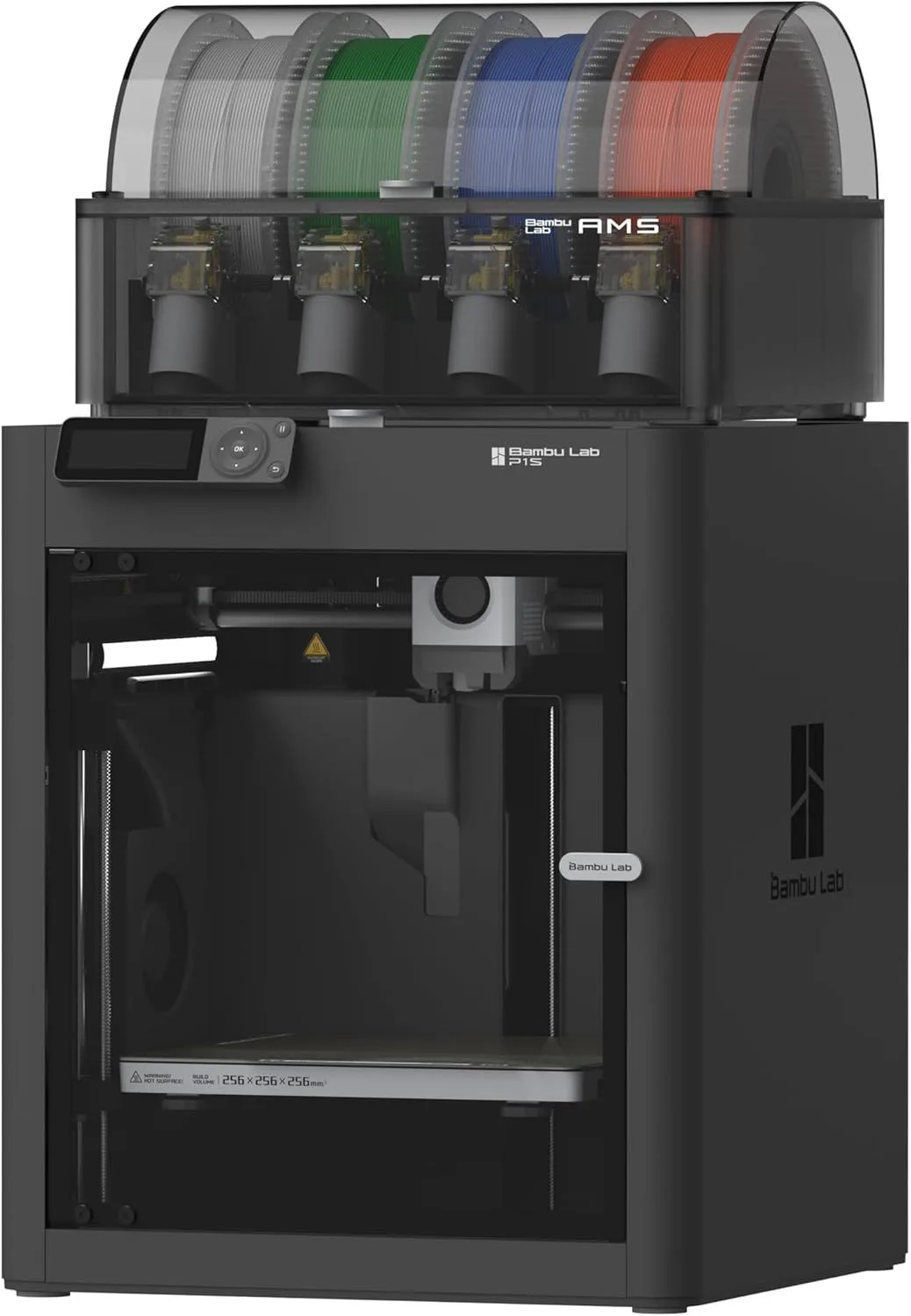
Production printers need three things hobby printers don't: enclosed chambers (dust and temperature control), failure detection (overnight prints can't be monitored), and hot-swappable nozzles (changing between 0.4mm detail and 0.6mm speed nozzles without tools). The Bambu Lab P2S checks all three boxes at the mid-range tier with its DynaSense servo extruder and AI clog detection.

Start with two identical printers. Identical machines mean identical slicer profiles, identical spare parts inventory, and the ability to run the same G-code file on either machine without recalibration. The P2S earned positive ratings from 183 of 200 web reviewers. One reviewer logged 300+ hours with zero reliability issues. That kind of consistency is what production demands.

Bambu Lab P2S — production workhorse
ID: P2S_PROD

Bambu Lab P2S

BEST_PRODUCTION_STARTER

Enclosed CoreXY with AI clog detection and servo extruder. Quick-swap nozzles for switching between detail and speed modes. The production starter — buy two.

Check Price on Amazon
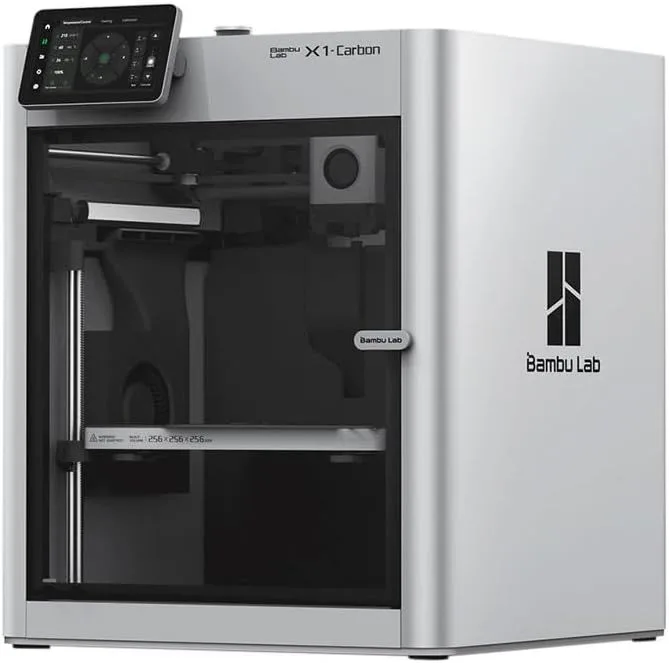
Bambu Lab X1 Carbon — flagship production
ID: X1C_PROD

Bambu Lab X1 Carbon

PREMIUM_PRODUCTION

LIDAR first-layer inspection catches failures before they waste hours. Hardened nozzle handles carbon fiber for engineering parts. The reliability premium is worth it for overnight production.

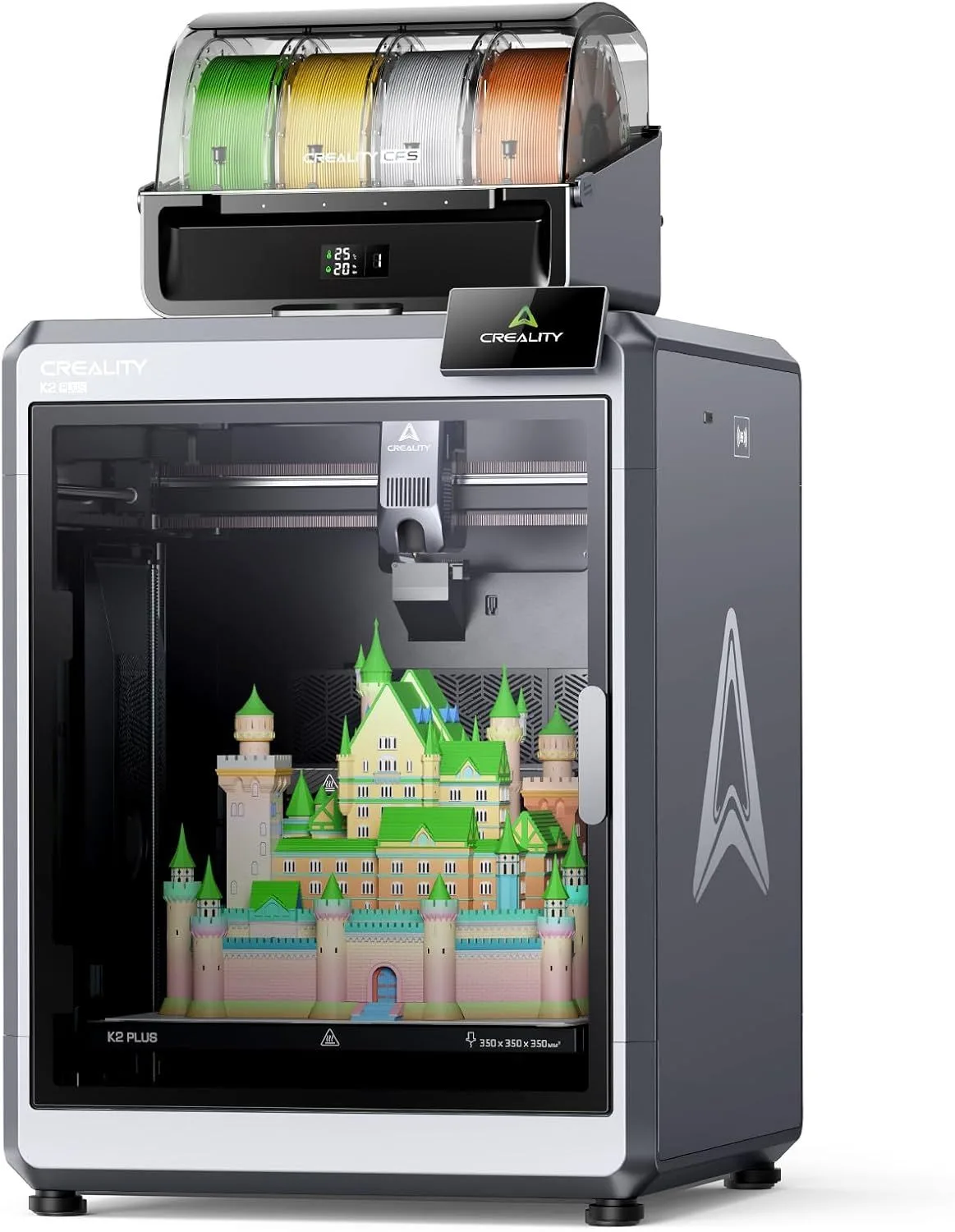
Creality K2 Plus Combo — large format production
ID: K2_PLUS_PROD

Creality K2 Plus Combo

LARGE_FORMAT_PRODUCTION

350mm³ volume for oversized products — cosplay armor, display pieces, architectural models. One K2 Plus replaces multiple smaller-bed prints for large items.

For scaling beyond 4 printers, the Bambu Lab X1 Carbon's LIDAR failure detection becomes essential. When you're running 6 printers overnight, you cannot babysit each one. The X1C detects spaghetti failures and first-layer adhesion issues automatically, pausing the print before wasting hours of filament and machine time. In our mining data, 200 Amazon reviewers confirmed the LIDAR and material handling claims with only a single contradiction. That 99.5% confirmation rate translates directly to production uptime.

The Creality K2 Plus Combo fills a different role — large-format production. At 350mm³, it prints items that would need to be split across multiple beds on a standard 256mm machine. For cosplay armor, large display pieces, or architectural models, one K2 Plus print replaces 3-4 smaller prints and eliminates glue seams. The 16-color CFS is a production bonus for multi-material items.

Production 3D printing workspace
ID: PRODUCTION_FLOOR

03_UNIT_ECONOMICS

Material cost is the smallest line item in 3D print production. A kilogram of Hatchbox PLA at $18-25 produces 40-80 typical consumer products depending on size. The real costs are time, electricity, and labor.

Electricity runs roughly a dollar or two per printer per day at 18 hours of operation (350-500W average draw). Two printers cost $30-90 per month in electricity. Filament at 2-4kg per printer per week runs $150-400 per month across a two-printer setup. Shipping materials, Etsy fees (roughly 7% per transaction), and packaging add another 15-20% on top of the sale price.

The profitable formula: find products where customers value the customization or niche-specificity enough to pay 5-8x material cost. A generic 3D-printed vase sells for $8-15 on Etsy. A custom-fit organizer for a specific Stanley tumbler sells for $15-25. A modular terrain set for D&D sells for $40-80. The raw material cost difference between these three products is negligible — the price difference is entirely perceived value.

Print time is your true inventory. Each hour of printer time has a revenue ceiling. A product that takes 6 hours to print and sells in the $15 range generates roughly $2-3 per print-hour. The same printer running a product that takes 2 hours and sells for a similar price generates three times the hourly revenue. Optimize for revenue per print-hour, not margin per unit.

04_PRODUCTION_WORKFLOW

Production is a rhythm, not a task.

Batch everything. Never print one item at a time for orders — fill the build plate. A P2S with a 256mm bed fits 4-8 typical products per run. Queue tomorrow's prints tonight and let them run overnight. Morning routine: remove finished prints, clean bed with IPA, start next batch. This is the rhythm of a productive print business.

Slicer profiles are production assets. Develop and save profiles for each product: optimal layer height (0.2mm for speed, 0.12mm for detail), infill density (15% for decorative, 30% for functional), support settings, and print speed. A well-tuned profile for a specific product reduces failure rate from 10% to under 2% and eliminates the need to babysit each run. Store profiles in version control so any printer can run any product.

Post-processing at scale. Sand support marks with a rotary tool, not hand sanding. Batch-dip in IPA for cleaning. Spray primer and paint in ventilated batches of 10-20 items. Post-processing labor is the hidden cost that kills profitability — design products that minimize or eliminate it. Self-supporting geometries, organic shapes that hide layer lines, and products that ship with minimal finishing.

Filament supply chain. Never run out. Keep a 2-week buffer of your top 3 colors in PLA. Buy in bulk (5-10kg orders) when brands run Amazon promotions. Track filament consumption per product in a spreadsheet. The worst business day is canceling customer orders because you ran out of white PLA and the next Amazon delivery is three days away.

05_SCALING_FROM_SIDE_HUSTLE

Phase 1 (months 1-4): validation. Two printers, Etsy shop, 5-10 products. Focus on finding which products sell and which don't. Expect $500-1,500 per month in revenue. This phase takes 2-4 months of testing product ideas. Most first products won't be your best sellers. Treat this phase as market research, not a business launch. The goal is data: which keywords drive traffic, which products convert views to purchases, which price points the market accepts.

Phase 2 (months 4-12): optimization. Four printers, optimized product line, Etsy + Shopify. Cut the products that don't sell. Double down on the 2-3 that do. Add color variations, size options, and bundle deals. Revenue target: $2,000-4,000 per month. Consider hiring part-time help for packing and shipping.

Phase 3 (year 2+): scale. Six or more printers, dedicated workspace, print farm management software (OctoPrint or Obico for remote monitoring). At this scale, printer management becomes a system, not a task. Standardize everything: same printers, same filament brands, same slicer profiles. Add capacity only when existing printers consistently run at 80%+ utilization. Revenue at this scale: $5,000-10,000+ per month, depending on niche and pricing.

The Phase 1 to Phase 2 transition is where most businesses die.

Not because of money — because of time. Running a print business requires daily attention to orders, print queues, shipping, customer messages, and inventory management. Two printers producing $1,000 per month feels manageable. Four printers producing $3,000 per month with 20+ weekly shipments becomes a part-time job. If you are not prepared to treat this like a real business spending 2-4 hours per day on operations, stay at Phase 1 as a side project. There is no shame in a profitable side hustle that stays small by design.

Filament costs scale linearly but labor does not — each additional printer adds roughly the same production capacity but requires diminishing additional labor. The fourth printer takes less incremental time than the second because you have systems in place. This is why Phase 3 becomes profitable at scale even with higher fixed costs: 6 printers running at 80% capacity with one person managing them can generate $8,000+ monthly revenue at 60-70% gross margins. Our cost analysis guide covers the financial math in detail for both hobby and business scenarios.

Print farm production setup with multiple enclosed printers

05b_NICHE_SELECTION

Your niche determines your ceiling. Pick carefully.

The highest-margin niches share three properties: the product solves a specific problem, no mass-manufactured alternative exists, and the target audience is willing to pay for custom solutions. Organizer inserts for specific tool chests, custom brackets for specific van conversion layouts, terrain sets for specific tabletop game systems — the narrower the niche, the higher the willingness to pay.

Avoid "cool but commodity" products — decorative items that look great on Instagram but compete with injection-molded alternatives from AliExpress at a fraction of the price. A printed lithophane competes with photo canvas prints. A printed phone stand competes with mass-produced stands at Walmart. Neither is a defensible business.

Test niche viability before investing in inventory. List 3-5 test products on Etsy with realistic photos and 2-week lead times. Run each for 30 days. The products that generate organic sales (not just from friends and family) are worth scaling. The ones that sit at zero views need either better SEO, better photos, or a different niche entirely.

Look, the Etsy 3D printing category is mature. Generic items have thousands of competitors. The opportunity is in micro-niches that large sellers ignore because the market is too small for them but perfectly profitable for a 2-4 printer operation. A product that sells 50 units per month at $25 each is $1,250 in monthly revenue from a single SKU — most Etsy print shops need only 3-5 active products to hit their income targets.

05c_MISTAKES_THAT_KILL_MARGINS

PRICING_TOO_LOW

New sellers underprice to get reviews. This trains customers to expect low prices and makes it impossible to raise them later. Price for value from day one. A quality product with good photos and clear descriptions sells at full price without needing to race to the bottom.

TOO_MANY_SKUS

Listing 50 products spreads your attention thin. Each SKU needs its own slicer profile, print settings, quality checks, photos, and inventory tracking. Start with 5-8 products. Cut the bottom performers ruthlessly. A focused catalog of 5 proven products with excellent photos and optimized listings outsells a scattered catalog of 50 untested ones every time.

IGNORING_POST_PROCESSING

Support nubs, stringing, bed adhesion marks, and visible layer lines look amateur if shipped as-is to paying customers. Budget 5-10 minutes per item for cleanup. Better yet — design products that print without supports. Self-supporting geometry is a production design skill that directly increases your margins by eliminating post-processing labor.

BUYING_PRINTERS_FIRST

Do not buy six printers on day one. Our top pick for a production starter setup is two CoreXY machines — start with two, prove the business model, then scale. Every idle printer is depreciating capital earning zero revenue. Add printers only when existing machines consistently run at 80%+ daily utilization. Overcapacity is the fastest way to negative ROI.

06_BUSINESS_QUERIES

How many printers does a 3D printing business need to start?

expand_more

Two printers minimum — one for production runs and one as a backup. A single printer failure halts your entire operation. The Bambu Lab P2S is the best starting production machine: enclosed, reliable, with AI failure detection. Scale to 4-6 printers within the first year based on order volume.

What materials should a print business stock?

expand_more

Start with PLA and PETG. PLA covers 70% of consumer products (organizers, decorative items, phone cases). PETG handles outdoor and heat-exposed items. Add TPU for flexible products when demand justifies it. Stock 3-5 neutral colors plus 2-3 high-demand colors per material type.

Where do 3D printing businesses sell?

expand_more

Etsy is the dominant platform for custom and small-batch 3D printed products. Shopify for branded storefronts. Local craft markets and maker fairs for direct sales. Print-on-demand through Craftcloud or Shapeways for no-inventory models. Most successful businesses start on Etsy, build a customer base, then migrate to their own Shopify store.

What are realistic profit margins for 3D printing?

expand_more

Material cost per print runs $1-5 for most consumer products. Etsy sellers price at 4-8x material cost, yielding 60-80% gross margins before platform fees, electricity, and time. The bottleneck is not margins — it is throughput. One printer running 18 hours per day maxes out at $2,000-4,000 monthly revenue for typical Etsy products.

How long before a 3D printing business becomes profitable?

expand_more

Equipment ROI typically happens within 3-6 months of consistent selling. A two-printer setup ($1,100-1,500 total) producing $200-400 per week in Etsy sales breaks even in 4-8 weeks of active selling. The real timeline depends on product-market fit — generic items (phone stands) have razor margins while niche products (custom D&D terrain, specific organizer systems) command premium pricing.

Production Hardware Selected — Compare Options

We recommend starting with 2-3 machines and scaling based on demand. Read full reviews of the production printers before ordering.

RELATED_CONTENT

David King
VERIFIED
WRITTEN_BY
David KingFounder

I built LayerDepth to create the detailed, unbiased 3D printer comparison resource I wished existed. With a background in aerospace manufacturing management at Rolls-Royce — overseeing the build and assembly of complete jet engine sections for Airbus and Boeing aircraft — I apply that same demand for rigorous analysis and high standards to evaluating print quality, mechanical reliability, and real-world performance.

Full methodology arrow_forward

INTEL_FEED

Subscribe to receive our top picks and hardware alerts — pricing shifts, new releases, and guide updates.

notifications_active
ALERT_PROTOCOL
Price & firmware changes
lock
ZERO_NOISE_GUARANTEE
Only changes. Unsubscribe anytime.

Update — April 6, 2026

A new competitor has entered this category. See our adventurer-5m-3d-printer review for the latest comparison.

Update — April 6, 2026

A new competitor has entered this category. See our adventurer-5m-3d-printer review for the latest comparison.

Update — April 6, 2026

A new competitor has entered this category. See our adventurer-5m-3d-printer review for the latest comparison.