ECOSYSTEM PLA VS OPEN-MARKET PLA
Polymaker PolyTerra PLA wins for most buyers. The matte finish hides layer lines better than any standard PLA, the price per kilogram undercuts Bambu Lab, and it prints beautifully on every printer brand — no ecosystem lock-in. Bambu printer owners who value RFID auto-configuration and never want to touch a spool profile should buy Bambu Lab PLA Basic instead — the convenience is real, even if the PLA itself is not materially superior.
Bambu Lab PLA Basic
The Bambu Lab tax buys you RFID: load a spool into the AMS, printer auto-detects material type, color, and remaining filament quantity. Zero manual profile selection. The PLA itself is standard glossy PLA — clean prints, strong layer adhesion, nothing remarkable about the material. On a non-Bambu printer, this is a generic spool at a premium price. The value proposition lives and dies with the Bambu ecosystem. If you own a P1S, A1, or X1 Carbon, the workflow friction it removes is worth the cost. On a Creality or Prusa: skip it.
Polymaker PolyTerra PLA
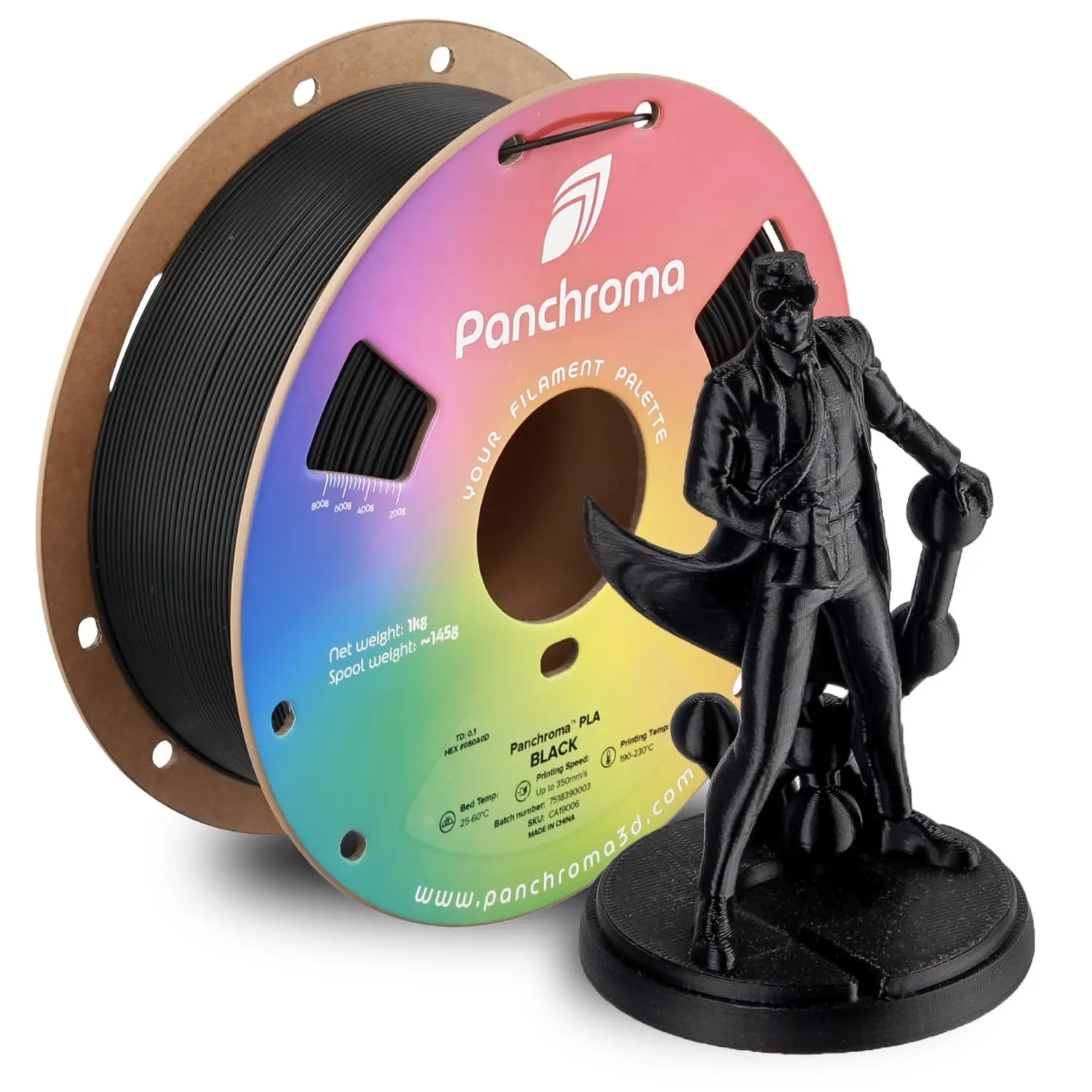
PolyTerra (now Panchroma) PLA does something no other budget filament does: it makes layer lines nearly invisible. The matte finish scatters light across layer boundaries, producing prints that look cleaner than they should at 0.2mm layer height. The recycled cardboard spool is an environmental gesture that also happens to fit AMS units without modification. At the lowest price tier among top-rated filaments, with 30+ colors including earth tones that no competitor matches, PolyTerra is the default PLA recommendation for display prints.
00_ SPEC_COMPARISON
[ FILAMENT_DATA: VERIFIED ]
| PARAMETER | BAMBU_PLA | POLYTERRA_PLA |
|---|---|---|
| MATERIAL | PLA | PLA (matte) check_circle |
| DIAMETER_TOLERANCE | 1.75mm (±0.03mm) drag_handle | 1.75mm (±0.03mm) drag_handle |
| PRINT_TEMP | 190–220°C drag_handle | 190–220°C drag_handle |
| SPOOL_WEIGHT | 1kg | 1kg (recycled cardboard spool) check_circle |
| COLOR_SELECTION | 25+ colors | 30+ colors (earth-tone specialty palette) check_circle |
| SURFACE_FINISH | Glossy | Matte check_circle |
| RFID_AUTO_CONFIG | Yes (Bambu printers) check_circle | No |
| PRICE_TIER | Under $25 | Under $25 check_circle |
1
BAMBU WINS
5
POLYTERRA WINS
2
TIED
01_
MATTE VS GLOSSY
This is the single difference that determines which filament you buy.
Bambu Lab PLA Basic produces a glossy finish. Light reflects uniformly off the surface, creating a polished look that also makes every layer line visible. Under direct lighting, you can count individual layers on a Bambu PLA print — the reflective surface acts like a magnifying lens for any extrusion artifact.
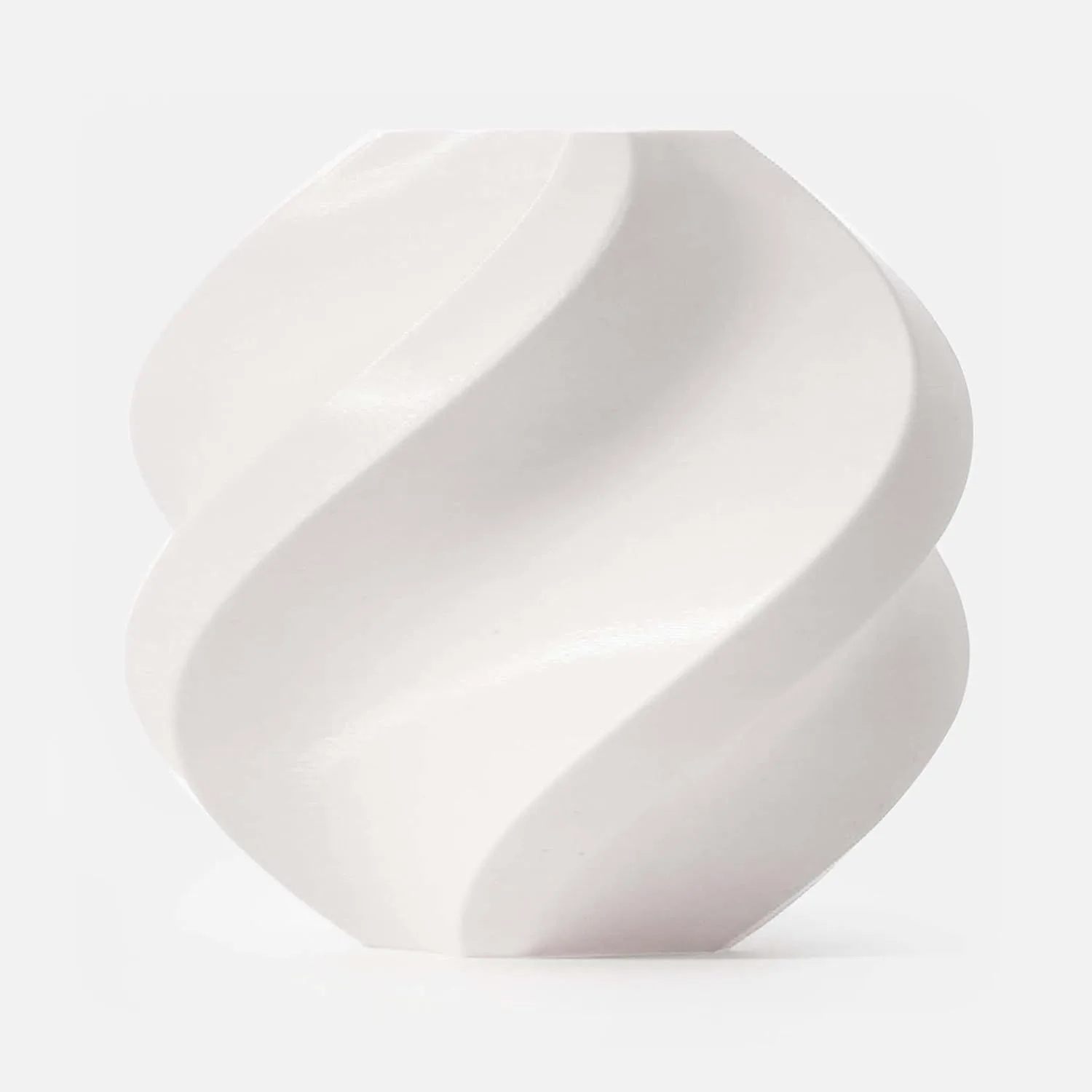
Polymaker PolyTerra PLA produces a matte finish. Light scatters across the surface instead of reflecting in parallel, which visually blends layer boundaries. At 0.2mm layer height on a tuned printer, PolyTerra prints appear almost smooth to the naked eye. One reviewer described the result as "resin-quality to a casual observer" — an exaggeration, but directionally correct. The matte effect is the single strongest layer-hiding technique available without post-processing.
The catch with matte PLA: it scratches. The same surface texture that hides layer lines also shows every scuff, fingerprint, and accidental scrape. A glossy PLA figurine can be wiped clean with a microfiber cloth. A matte PolyTerra figurine accumulates visible wear marks over months of handling. For display pieces that sit on a shelf untouched, this is irrelevant. For functional items you handle daily — phone cases, tool holders — the scratch vulnerability matters.
Layer adhesion between the two is close but not identical. Bambu Lab PLA Basic bonds slightly stronger between layers than PolyTerra — the matte modifiers in Polymaker's formula alter the crystallization behavior during cooling, producing fractionally weaker inter-layer fusion. On a standard 2-hour print, the difference is undetectable. On a 20-hour tall print with thin walls, Bambu's glossy PLA holds together more reliably under lateral stress.
Post-processing tells a different story. Glossy Bambu PLA sands down with standard grits (220 → 400 → 800) and takes spray paint evenly because the smooth surface provides consistent tooth for primer. PolyTerra PLA's matte surface resists sanding — the textured finish clogs sandpaper faster and requires more material removal to reach a smooth base. If your workflow ends at "print and display," PolyTerra wins — the print looks finished without post-processing. If your workflow includes sanding and painting, Bambu PLA is the better starting point.
02_
RFID & ECOSYSTEM
Here's the thing about RFID: it is a convenience feature masquerading as a quality feature.
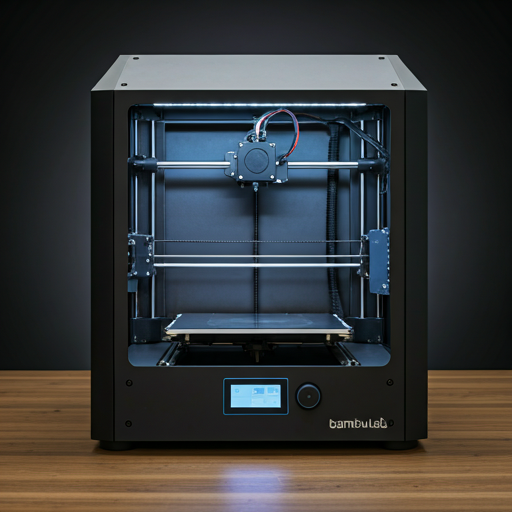
Bambu Lab PLA Basic ships with an RFID tag embedded in every spool. Load it into a Bambu AMS or AMS Lite, and the printer auto-detects the material type, color, print temperature range, and approximate remaining quantity. The slicer pre-loads the optimal print profile with zero manual input. For multi-color prints where you load 4 spools at once, RFID eliminates the most common setup error — loading the wrong material profile for a spool position.
Polymaker PolyTerra has no RFID. You select the filament profile manually in your slicer — a 30-second task that experienced users do on autopilot but beginners occasionally get wrong. On Bambu printers with AMS, non-RFID spools trigger a manual confirmation dialog every time you load one. Not a showstopper, but a recurring friction point that the RFID tag eliminates.
The uncomfortable truth: RFID is an ecosystem lock-in mechanism that also happens to be genuinely convenient. Bambu wants you buying Bambu filament because every RFID scan reinforces the habit loop. The convenience is real. The strategy is also real. As a buyer, you should treat it like any loyalty program — use it when the value proposition makes sense, ignore it when a non-RFID filament delivers a better result.
The 498 Bambu PLA Basic reviews on Amazon include a recurring pattern: 8% mention RFID as a specific praise point. Another 16% mention "works" and "easy" in contexts that suggest the RFID workflow contributed to their experience. The RFID convenience does translate into measurable satisfaction — but so does PolyTerra's matte finish, which gets specific praise from 23% of its reviewers. Both products have a standout feature that drives loyalty. The question is which feature matters more to your specific printing workflow.
On non-Bambu printers — Creality K2 SE, Creality K1C, Prusa, Elegoo — the RFID tag is dead silicon. The filament still prints fine, but you are paying for a feature you cannot use. At that point, PolyTerra wins on material quality, color range, price, and environmental credentials. There is no scenario where Bambu PLA is the better buy on a non-Bambu printer.
BAMBU RFID WORKFLOW
- 01. Load spool into AMS
- 02. RFID detected → profile auto-set
- 03. Start print
TOTAL: ~10 SECONDS
POLYTERRA WORKFLOW
- 01. Load spool into AMS/holder
- 02. Select PLA profile in slicer
- 03. Confirm material on printer
- 04. Start print
TOTAL: ~40 SECONDS
03_
COLOR RANGE & SPOOL QUALITY
Polymaker PolyTerra PLA offers 30+ colors including earth tones — Fossil Grey, Savannah Yellow, Army Dark Green — that no other budget PLA brand carries. Bambu Lab PLA Basic offers 25+ colors in standard primaries and pastels. For matching a specific shade on a cosplay piece or architectural model, PolyTerra's specialty palette gives you options that Bambu cannot match.
Both filaments are vacuum-sealed with desiccant. Both arrive at factory-dry moisture levels. The spool construction differs: Bambu uses a standard plastic spool that works with every AMS and third-party holder. PolyTerra uses a recycled cardboard spool — lighter, environmentally better, but it absorbs moisture faster once the vacuum seal is broken. In a humid environment, an opened PolyTerra spool left on a shelf degrades faster than an opened Bambu spool. Our filament storage guide covers long-term solutions for both spool types.
Bambu's cardboard refill system deserves mention. You can buy PLA refill rolls (no spool) and load them onto reusable Bambu spools — reducing plastic waste and per-roll cost. The refill wind quality draws mixed reports in the 498-review dataset: most users love the system, but 8% of critics specifically mention spool-related issues (tangling after transferring to reusable spools, filament winding confusion during manual respooling). PolyTerra's recycled cardboard spool has no refill option, but the spool itself generates less plastic waste than a traditional spool in the first place.
Color accuracy between batches: Polymaker's matte finish provides more visual consistency across production batches than glossy PLA, because the light-scattering surface texture masks minor pigment concentration differences. A Bambu PLA spool in "Jade White" may look fractionally different from another "Jade White" spool purchased 3 months later — the glossy surface amplifies any pigment variation. For multi-spool projects printed across different purchase dates, PolyTerra's matte finish reduces the risk of visible color seams.
One detail worth noting about AMS compatibility: both spools fit the Bambu AMS without modification. The PolyTerra cardboard spool is slightly lighter, which means the AMS motor draws less current during feeding — a marginal benefit that compounds over hundreds of spool changes in a print farm context. Several PolyTerra reviewers explicitly mentioned "spool fits well in the AMS" and "feeds perfectly even at higher speeds." The AMS RFID dialog does appear for PolyTerra spools (asking you to confirm material type manually), but it is a one-tap confirmation, not a blocking workflow. For a broader look at how filament choice interacts with material types beyond PLA, our comprehensive filament guide covers PETG, ABS, TPU, and specialty materials alongside PLA comparisons.
BAMBU_COLOR_SYSTEM
- + 25+ standard colors
- + Refill rolls reduce per-kg cost
- + Glossy finish with vibrant saturation
- − No earth tones or specialty shades
- − Batch color variation visible on glossy surface
POLYTERRA_COLOR_SYSTEM
- + 30+ colors including earth-tone exclusives
- + Matte finish masks batch pigment differences
- + Recycled cardboard spool — eco-friendly
- − No refill system — one spool per purchase
- − Cardboard spool absorbs moisture faster once opened
Bambu Lab PLA Basic has 12,000+ reviews to PolyTerra's 9,500. But the review composition tells a different story: 41 of the Bambu Lab reviews (8%) specifically mention RFID, meaning nearly 1 in 10 Bambu filament buyers are reviewing the tag, not the PLA. Strip out the RFID praise and the underlying material satisfaction rates converge. Both filaments print clean, extrude consistently, and produce strong parts. The actual differentiator is not the PLA — it is the ecosystem (Bambu) and the surface texture (PolyTerra). You are buying a workflow, not a polymer.
04_
SPEED & COMPATIBILITY
Polymaker recently reformulated PolyTerra (rebranded as Panchroma) with a high-speed formula supporting volumetric speeds up to 28mm³/s and print speeds of 350mm/s. The previous PolyTerra formula was adequate for speeds up to 200mm/s but struggled at the velocities modern CoreXY printers demand. The reformulation closes a gap that Bambu PLA Basic never had — Bambu's filament was always tuned for high-speed Bambu hardware from day one.
Both filaments print in the 190-220°C range. Both use standard 1.75mm diameter with ±0.03mm tolerance. Both feed smoothly through AMS, CFS, and standard spool holders. On paper, they are interchangeable at the material specification level. In practice, two differences emerge at high speed.
First: Bambu PLA's glossy formula flows slightly more freely at high volumetric rates because the matte modifiers in PolyTerra create fractionally more friction in the melt zone. At 300mm/s on an A1 Mini or X1 Carbon, the difference is below the threshold of visual detection. At 400mm/s+ on a fully tuned X1 Carbon with a 0.6mm nozzle, Bambu PLA produces fractionally more consistent solid infill layers.
Second: PolyTerra's cardboard spool creates more drag resistance in the AMS than Bambu's plastic spool at high retraction speeds. Several reviewers noted this indirectly — "feeds smoothly" appears in 23% of PolyTerra reviews, versus "spool fits well in the AMS" in a separate context that suggests the fit is tighter. Not a jam-causing issue, but a minor consideration for print farms running 24/7.
Look — for the K2 SE, Elegoo Centauri Carbon, and most budget printers where users print at 150-300mm/s, both filaments perform identically. The speed differences only manifest at extreme velocities on premium hardware. For a complete look at how all four PLA brands stack up across speed ranges, our best filament roundup ranks them by use case.
One final note on compatibility: both filaments work with PVA support material in dual-extrusion setups, and both dissolve cleanly in sodium hydroxide solution for support removal. The temperature profiles for support interface layers differ slightly — PolyTerra's matte surface creates a marginally cleaner support-to-model separation line because the textured surface has less adhesion at the interface. On single-extruder printers where you snap off tree supports manually, this difference is meaningless. On an X1 Carbon with PVA support capability, PolyTerra's clean separation line saves 5-10 minutes of post-processing per model — a real time saver on production runs of detailed figurines or miniatures.
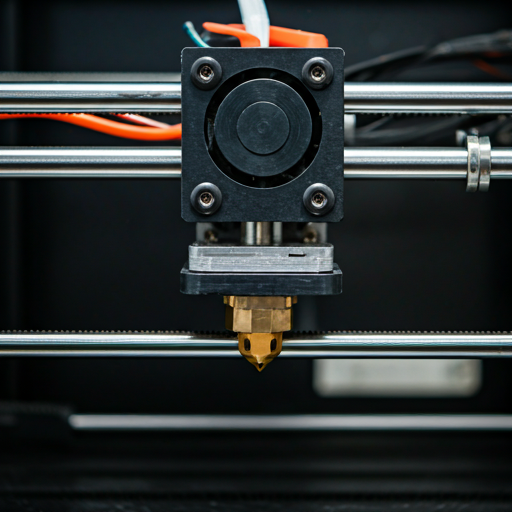
PANCHROMA REFORMULATION CLOSES THE GAP AT 350MM/S. DIFFERENCES ABOVE 400MM/S ARE MEASURABLE BUT MINOR.
WHICH SPOOL GOES IN YOUR PRINTER
BUY BAMBU LAB PLA
You own a Bambu Lab printer with AMS and load 4+ spools per week. The RFID auto-detection removes a workflow friction you hit dozens of times monthly. You print at 400mm/s+ on an X1 Carbon and need a filament tuned for that hardware. You prefer glossy surface finish for post-processing (sanding, painting, acetone smoothing). You value the refill spool system for reducing per-kg cost and plastic waste.
On a Bambu printer, the ecosystem integration makes Bambu PLA Basic the default spool for daily use. The material is not special. The workflow is. Read our full Bambu PLA review for refill system tips and color recommendations.
- RFID AUTO-CONFIGURATION
- HIGH-SPEED TUNED (400MM/S+)
- GLOSSY FINISH — PAINTABLE
- REFILL SYSTEM AVAILABLE
BUY POLYTERRA PLA
You print display models — figurines, sculptures, miniatures, cosplay pieces — where layer line visibility is the primary quality metric. You own any non-Bambu printer where RFID provides zero value. You want earth-tone and specialty colors that no other brand carries. You care about environmental impact and prefer recycled cardboard spools. You buy filament based on material performance, not brand ecosystem.
PolyTerra PLA is the best-looking PLA filament on the market. The matte finish is the single strongest layer-hiding technique available without post-processing — and the price is the lowest among top-rated brands. That combination is hard to argue against.
- MATTE FINISH — HIDES LAYER LINES
- 30+ COLORS + EARTH-TONE EXCLUSIVES
- LOWEST PRICE PER KG
- RECYCLED CARDBOARD SPOOL
MATERIAL_DOSSIER
Is Polymaker PolyTerra PLA discontinued? expand_more
Does Bambu Lab PLA work on non-Bambu printers? expand_more
What is the difference between PLA and PolyTerra PLA? expand_more
Is Bambu Lab filament overpriced? expand_more
Which PLA filament hides layer lines best? expand_more
This comparison draws on 12,000+ Bambu Lab PLA Basic reviews (498 analyzed in depth) and 9,500+ Polymaker PolyTerra PLA reviews (13 analyzed in depth), manufacturer specification sheets, RFID feature analysis across the Bambu ecosystem, and cross-referencing with performance data from our printer reviews running both filament brands. Polymaker's rebrand from PolyTerra to Panchroma is reflected in recent Amazon listings — the underlying filament formula remains the same with an updated high-speed formulation. For all four PLA brands ranked and compared, see our best 3D printer filament roundup.